Eco-Friendly Traveler Checklist: Pack Lighter, Waste Less, Travel Smarter
Travel feels better when the packing is simple and the footprint is smaller. Our Eco-Friendly Traveler Checklist is a digital download designed to streamline prep, reduce single-use waste, and keep sustainable choices realistic—whether your trip is a weekend city break or a long-haul adventure. You can use it as a repeatable system: plan, pack, refill, and re-use with confidence.
If you want a ready-to-use version you can duplicate for each trip, start here: Eco-Friendly Traveler Checklist (digital download).
What this digital checklist helps you do (fast)
- Turn sustainable travel into a step-by-step routine: pre-trip planning, packing, and on-the-road habits in one place.
- Avoid last-minute purchases by tracking essentials early (reusables, toiletries, documents, health items).
- Reduce waste without overpacking by focusing on multi-use items and refillable options.
- Stay consistent across trips: save a master copy, duplicate it per destination, and adjust based on climate and activities.
Before booking: a quick sustainability reset
- Choose the lightest option that still meets your trip goals: fewer items, fewer replacements, fewer impulse buys.
- Plan reusables around your destination: refill stations, grocery access, local transit, and laundry availability.
- Build a “use-first” list: what you already have at home that can travel with you instead of buying new.
- Set one simple rule for the trip (examples: no bottled water, no single-use cutlery, refill toiletries only).
Keeping it simple is the win. When you reduce the need to buy on the go, you automatically cut packaging waste and the stress of hunting down “good enough” replacements. For a helpful baseline on waste reduction priorities, the U.S. EPA’s overview of Reduce, Reuse, Recycle supports the same hierarchy: reduce first, then reuse, then recycle.
Zero-waste packing list essentials (the core kit)
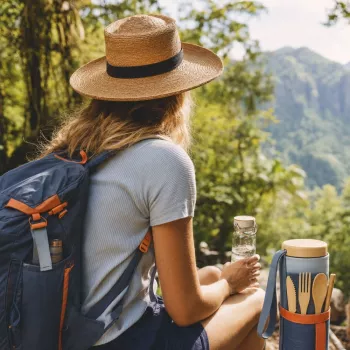
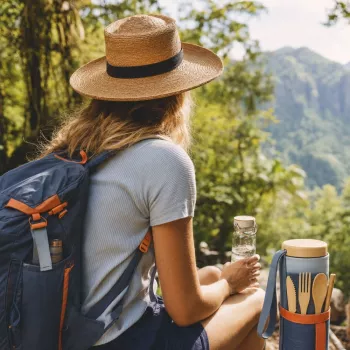
- Hydration: reusable water bottle, optional filter or purification option for destinations without safe tap water.
- Food-to-go: compact container, reusable utensils, reusable straw (only if you genuinely use it), cloth napkin.
- Bags: foldable tote for groceries/markets, small zip pouch for snacks, laundry bag for separating worn items.
- Personal care: refillable bottles, solid bars (soap/shampoo) where practical, bamboo or replaceable-head toothbrush, reef-safe/suitable sunscreen when needed.
- Clean-up: small bar soap or concentrated detergent sheet for sink laundry, travel clothesline or clips if staying longer.
- Comfort and health: reusable mask (as needed), small first-aid basics, menstrual cup or reusable pads if preferred.
Low-waste swaps that save space (and hassle)
| Common travel item |
Waste-cutting alternative |
Why it works on the road |
| Plastic water bottles |
Reusable bottle + refill plan |
Cuts daily single-use waste and keeps hydration consistent |
| Mini toiletry duplicates bought per trip |
Refillable bottles or solid bars |
Less packaging, fewer leaks, easier to replenish |
| Plastic shopping bags |
Foldable tote + small pouch |
Always ready for markets, snacks, and souvenirs |
| Disposable cutlery/napkins |
Reusable utensil set + cloth napkin |
Works for airports, takeout, and day trips |
| Single-use laundry pods in plastic |
Detergent sheets or concentrated soap |
Lightweight and simple for sink washes |
Pack lighter by choosing multi-use pieces
- Aim for a small capsule: repeatable tops, one versatile layer, and a single “dress up” option that still feels comfortable.
- Choose quick-dry, easy-care fabrics when possible to support sink laundry and reduce the need for extra outfits.
- Limit “just in case” items by setting a re-wear plan (especially for layers, outerwear, and shoes).
- Build outfits around two neutral bases and one accent color to keep combinations effortless.
If you want to pair sustainability with a polished, low-stress wardrobe plan, our team recommends combining this eco checklist with Travel Style Checklist: Pack Light, Look Stylish. You’ll waste less when every item earns its place and works in multiple outfits.
On-the-go habits that make the checklist actually work
- Refill first, buy second: check refill options at accommodations, gyms, cafes, and grocery stores.
- Say no once, not ten times: keep reusables accessible (top pocket, outer pouch) so they get used.
- Waste-sorting basics: learn local recycling/compost norms and keep a small “trash until later” bag for day trips.
- Souvenir filter: choose consumables (local food, spices) or practical items you’ll use repeatedly rather than novelty clutter.
- Leave places better: stick to marked paths, respect wildlife guidelines, and minimize disturbance in natural areas.
For nature-forward destinations, aligning your habits with the Leave No Trace Seven Principles helps you avoid “accidental impact” (like feeding wildlife, straying off-trail, or leaving micro-trash behind).
How to use the checklist for different trip types
For a beach trip where you’ll be in and out of the water, it helps to choose gear that supports fewer total items and faster drying. If you’re building a streamlined beach capsule, consider adding a practical piece like our Women’s Long Sleeve One-Piece Surf Swimsuit – Quick Dry Patchwork Design so you’re not packing extra layers “just in case.”
Make it a repeatable system: print, save, and reuse
Pair it with a style-first packing plan
FAQ
Is this checklist a physical product or a digital download?
It’s a digital download. You can print it for a packing station or fill it in digitally on your phone or tablet so you can reuse it for every trip.
How does a zero-waste packing list help if the destination doesn’t have great recycling?
It helps most by reducing what becomes trash in the first place: reusables, refillables, and low-packaging purchases. When recycling options are limited, you can also consolidate and carry out unavoidable waste until you find proper disposal.
What are the easiest eco-friendly swaps to start with?
Start with a small core you’ll actually use: a reusable water bottle, a foldable tote, a compact food container, a simple utensil set, and refillable toiletries. Once those feel automatic, add upgrades like detergent sheets or a small repair kit.
Recommended for you











Leave a comment