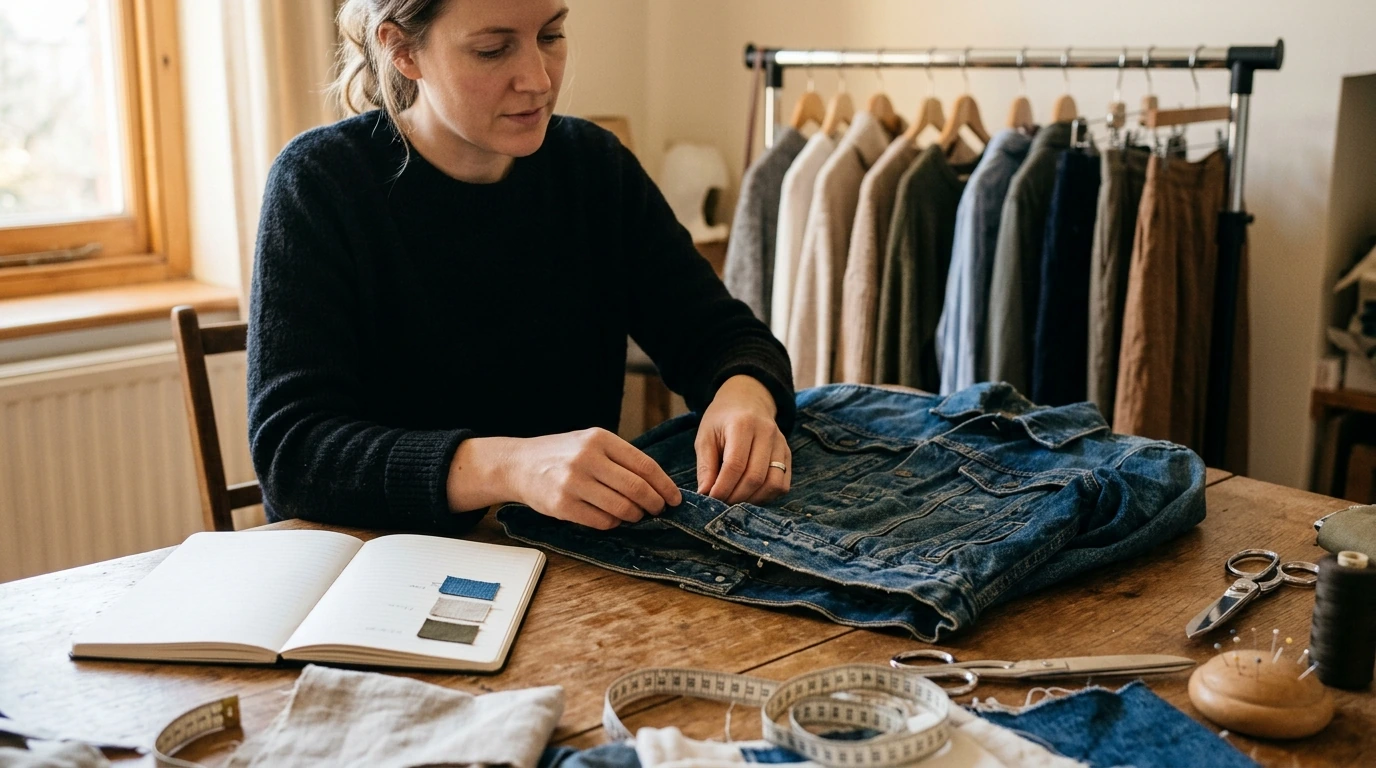
A style makeover doesn’t have to mean starting over—it can mean reconstructing what’s already in your closet and making it feel intentional again. Our team created DIY Style Makeover | Reconstructed Clothing DIY Planner as a reconstructed clothing DIY planner and creative wardrobe guide (with eBook) designed to help you turn “almost-wears,” forgotten basics, and thrift finds into outfits that feel current, personal, and repeatable. The focus stays simple: plan first, cut second—so every tweak has a purpose, every remake fits your lifestyle, and your wardrobe gets more wearable without more waste.
Reconstruction is redesigning existing garments through small, strategic changes: hemming, reshaping, combining panels, changing closures, adding contrast fabric, or reworking silhouettes. Instead of chasing random new pieces, you’re building a visual “through-line” across what you already own.
| Wardrobe problem | Reconstruction move | Result you’ll notice |
|---|---|---|
| It fits but feels boring | Change neckline, add a slit, swap buttons/zip | Instantly looks intentional and styled |
| Great fabric, wrong silhouette | Crop/hem, taper legs, add darts | Modern proportion without buying new |
| Too tight in one area | Insert side panels, convert to lace-up, add gusset | Comfort upgrade while keeping the piece |
| Not enough outfits come out of it | Turn dress into set, split into top + skirt | More mix-and-match combinations |
| You love it but never reach for it | Re-dye, add contrast binding, simplify details | Feels “new” and easier to style |
Our goal is to help you stop guessing and start finishing. The planner pages are designed to connect creativity to real-life wear, so your remakes don’t live on a hanger forever.
If you’ve ever started a DIY and stalled halfway, this weekly rhythm keeps your momentum practical. You’ll finish fewer projects at a time—but you’ll wear more of them.
A reconstructed wardrobe shines when there’s one statement layer that ties outfits together—especially in colder months and transitional styling. After you define your color palette in the planner, choose one bolder piece that still works with your core neutrals. For creative casual outfits, our team loves the idea of pairing remade basics with an art-forward layer like the Winter Velvet Hoodie with Paint Splash Design for Women to keep the look expressive but still easy to repeat.
If travel is part of your routine, reconstruction becomes even more useful: lightweight sets, multi-wear pieces, and layers that all mix. To keep packing practical (and avoid bringing “maybe” items), pair your remake list with Travel Style Checklist: Pack Light, Look Stylish so your suitcase reflects the wardrobe you actually wear.
Yes. We designed it to help you plan before you start, so you can choose beginner wins like hems, closures, and small fit tweaks, then build confidence over time. The worksheets also encourage pinning and basting first, so your steps stay simple and reversible.
A strong basics kit includes a measuring tape, fabric scissors or a rotary cutter, a seam ripper, pins or clips, needle and thread, and an iron for pressing. Helpful upgrades are bias tape, interfacing, snaps, and “extra fabric” harvested from older garments you already own.
Use a quick filter: fabric quality, comfort, sentimental value, ease of alteration, and how many outfits the piece could realistically create. Prioritize items with strong material and fixable fit, and recycle textiles that are too damaged to repair or repurpose.









Leave a comment